Spring service guide
When this Spring service may fit
Sewer Line Replacement in Spring is intended to replace a private sewer run when distributed deterioration, repeated failures, poor alignment, or incompatible pipe makes spot repair insufficient. The scope may fit when camera footage shows several failed sections, cast iron is deteriorated throughout, grade is unreliable, or earlier spot repairs have not stopped recurrence. The reported condition starts the review but does not replace inspection, measurements, documentation, or a written provider recommendation.
Slab homes, large subdivisions, apartments, schools, retail, light commercial sites, pools, and irrigation systems are common. In this property mix, the request should identify the building type, occupancy, known pipe material, affected fixtures or structures, prior work, and who controls each access point or shutdown.
Local conditions that can affect planning
Long service lines, clay soil movement, mature roots, multiple MUDs, irrigation, and mixed construction ages can change the likely leak route. These conditions can change inspection, route selection, excavation, protection, shutdowns, and restoration. They do not prove the cause or authorize work without property-specific confirmation.
System boundaries and service method
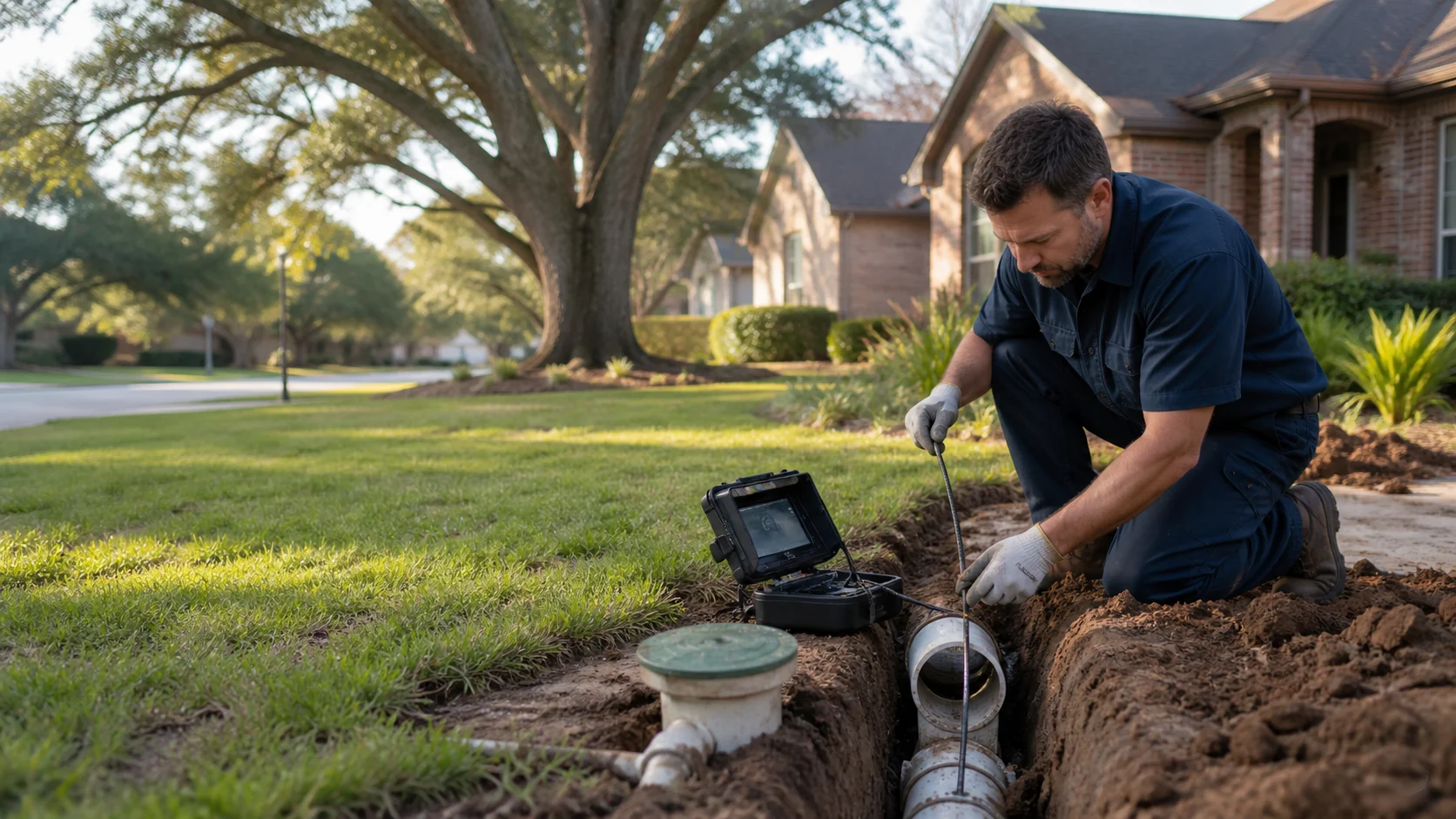
The relevant system includes the full private sewer route, connection points, branch tie-ins, cleanouts, slope, bedding, easements, structures, and finished surfaces. The work may involve route verification, camera inspection, depth and grade measurement, utility locating, open-cut replacement, trenchless alternatives, testing, and inspection. A qualified operator should explain which steps apply at the exact property, which conditions remain uncertain, and which discoveries can change the price or method.
Documentation expected for the Spring property
Request the replacement limits, selected material and diameter, grade plan, branch reconnections, cleanout locations, restoration boundary, and verification record. The record should also identify the provider, Responsible Master Plumber, insurance status, address, permit and inspection responsibility, included materials, schedule, shutdowns, cleanup, protection, exclusions, and warranty terms.
Access and coordination in Spring
Confirm the exact community and jurisdiction, meter location, gate codes, pool or irrigation systems, recent utility work, and access to interior shutoffs. For this service, also identify fixtures or branches affected, accessible shutoffs or cleanouts, finished surfaces, utilities, tenants, pets, security, work-hour limits, and the person authorized to approve changes.
Method, restoration, and responsibility boundaries
full replacement should be supported by line-wide condition and lifecycle value, not by a single blockage that can be cleared without structural work The proposal should distinguish plumbing from excavation, utility work, engineering, demolition, remediation, drywall, painting, flooring, paving, landscaping, and other restoration. The responsible party for each boundary must be clear before work starts.
What affects cost in Spring
Core variables include replacement length, depth, pipe diameter, access, slab or paving crossings, landscaping, utility conflicts, permits, inspection, and restoration. Local travel, access, parking, security, jurisdiction, occupied-space coordination, after-hours work, and changed field conditions can also affect the total. Compare written scopes and evidence rather than headline prices alone.
Preparing the request
Share the exact Spring address or ZIP code, property type, symptoms, known material, prior repairs, available images or video, municipal or MUD details, access limits, and preferred timing. Do not send payment information or security codes through the form.