Energy Corridor property guide
Property and plumbing context in Energy Corridor
The Energy Corridor includes office campuses, hotels, apartments, retail centers, and established neighborhoods along west Houston transportation corridors.
Large commercial buildings, multifamily communities, hospitality, restaurants, and nearby homes often use multiple meters, long branches, and managed mechanical rooms. These differences can change pipe routes, access, shutdowns, utility responsibility, restoration, and the number of systems that must be considered before a provider prepares a price.
Local conditions that can change the request
Irrigation, cooling and condensate systems, private site mains, tenant plumbing, and long buried lines can all contribute to unexplained consumption or moisture. Those conditions do not prove a specific plumbing failure. They help explain why the exact property, system, material, prior work, and available inspection evidence matter.
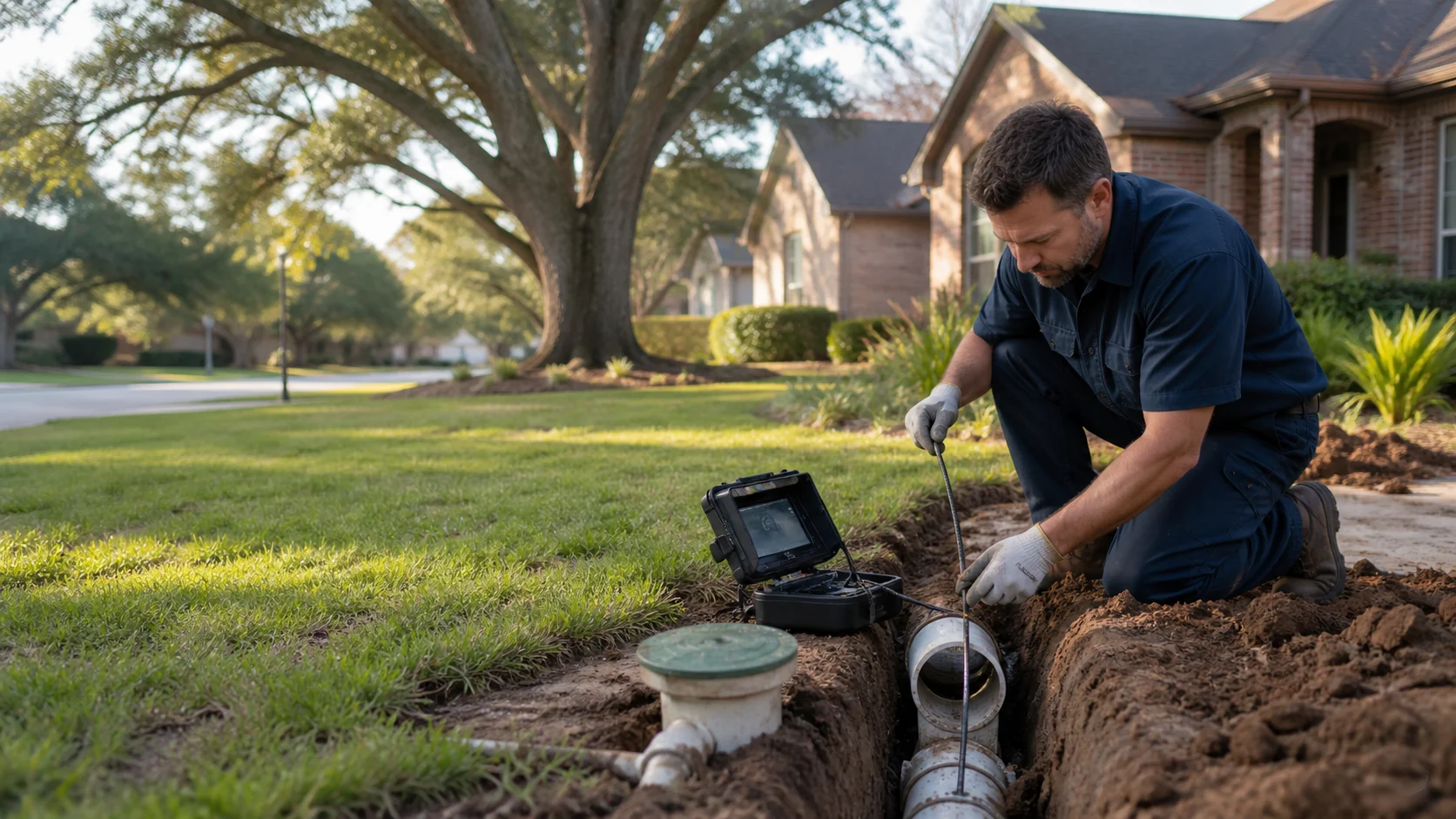
Preparing a Energy Corridor property
Coordinate property management, security, loading access, meter maps, tenant notices, shutdown approval, and any after-hours testing requirement.
Before requesting service, record the first symptom, timing, affected fixtures or buildings, known pipe material, prior repairs, recent construction, municipal or MUD information, tenant or manager approvals, parking, gates, pets, and acceptable shutdown windows.
Provider and jurisdiction verification
The responsible provider, plumbing license, insurance, permit authority, inspection process, utility boundary, and exact ZIP-code coverage must be verified for the property. This website does not claim an office or operator in Energy Corridor.
How the local service pages work
The links below stay inside Energy Corridor. Each destination combines one approved service with this market's property, access, and infrastructure context, then links to related services in Energy Corridor and the same service in nearby markets.