Downtown Houston service guide
When this Downtown Houston service may fit
Sewer Cleanout Installation in Downtown Houston is intended to add a service opening that supports safer future inspection, cleaning, testing, and repair access to a private building sewer. The scope may fit when no practical cleanout exists, the current opening is damaged or buried, or recurring service requires access at a better location. The reported condition starts the review but does not replace inspection, measurements, documentation, or a written provider recommendation.
High-rises, hotels, office towers, converted buildings, entertainment venues, and multifamily properties often use risers, mechanical rooms, and tenant branches. In this property mix, the request should identify the building type, occupancy, known pipe material, affected fixtures or structures, prior work, and who controls each access point or shutdown.
Local conditions that can affect planning
A reported leak may cross floors, shafts, ceiling plenums, common piping, condensate paths, or tenant boundaries before becoming visible. These conditions can change inspection, route selection, excavation, protection, shutdowns, and restoration. They do not prove the cause or authorize work without property-specific confirmation.
System boundaries and service method
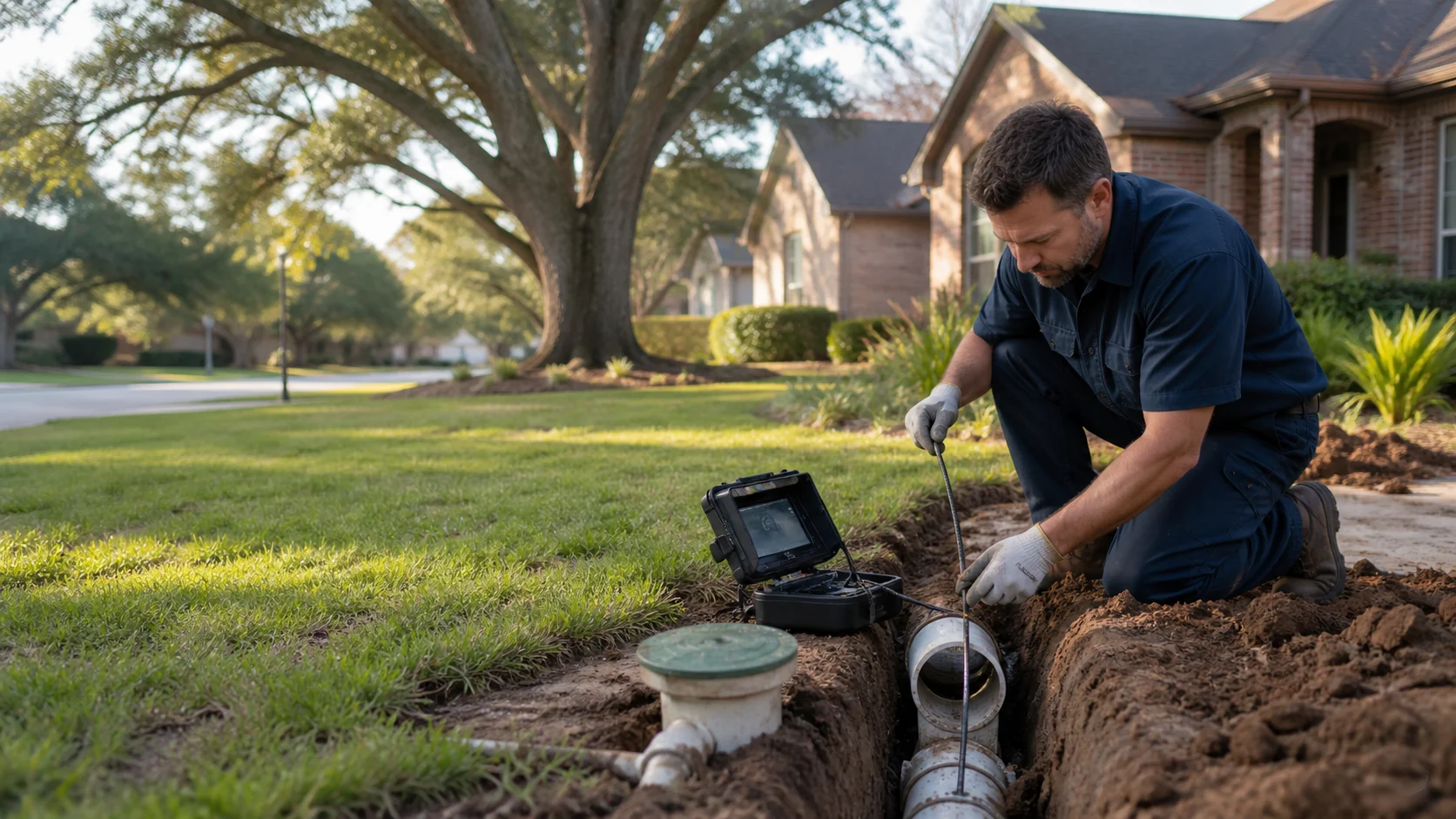
The relevant system includes the building drain and sewer route, pipe material and diameter, grade, existing fittings, utilities, finished surface, and proposed access point. The work may involve route confirmation, utility locating, excavation, compatible fitting installation, riser and cap placement, leak or flow testing, and surface restoration. A qualified operator should explain which steps apply at the exact property, which conditions remain uncertain, and which discoveries can change the price or method.
Documentation expected for the Downtown Houston property
Request the cleanout location, connection material, direction of access, finished elevation, protection from damage, and verification of a secure connection. The record should also identify the provider, Responsible Master Plumber, insurance status, address, permit and inspection responsibility, included materials, schedule, shutdowns, cleanup, protection, exclusions, and warranty terms.
Access and coordination in Downtown Houston
Building engineering approval, security, loading access, elevator use, shutdown notices, and after-hours testing may be necessary. For this service, also identify fixtures or branches affected, accessible shutoffs or cleanouts, finished surfaces, utilities, tenants, pets, security, work-hour limits, and the person authorized to approve changes.
Method, restoration, and responsibility boundaries
the selected location should provide useful access without creating a trip hazard, vehicle-load risk, drainage problem, or conflict with other utilities The proposal should distinguish plumbing from excavation, utility work, engineering, demolition, remediation, drywall, painting, flooring, paving, landscaping, and other restoration. The responsible party for each boundary must be clear before work starts.
What affects cost in Downtown Houston
Core variables include depth, pipe material, location, excavation, paving or landscaping, traffic rating, utilities, permits, inspection, and restoration. Local travel, access, parking, security, jurisdiction, occupied-space coordination, after-hours work, and changed field conditions can also affect the total. Compare written scopes and evidence rather than headline prices alone.
Preparing the request
Share the exact Downtown Houston address or ZIP code, property type, symptoms, known material, prior repairs, available images or video, municipal or MUD details, access limits, and preferred timing. Do not send payment information or security codes through the form.